

One missed headline can spark a firestorm.
A protest gains traction overnight. A viral post spins a false narrative. A local news story morphs into a national controversy—before your agency even sees it coming.
Still, many government teams rely on free tools like Google Alerts to monitor the media landscape. The problem? These tools miss too much. And in a crisis, missing even one mention can lead to:
- Public backlash before a statement is drafted
- Council meetings blindsiding leadership
- Political escalation fueled by misinformation
- Off-message or delayed responses that erode public trust
To stay ahead of rapidly evolving issues, government agencies need more than Google Alerts.
They need AI-driven alert systems that prioritize relevance, detect sentiment changes, and monitor across both digital and traditional channels—like those in Prowly’s full-spectrum monitoring suite.
Try Prowly's media monitoring free for 7 days
Start tracking your brand and keywords for free (no credit card required) in Prowly.
- Comprehensive monitoring: Track the web and social media mentions.
- Transparent pricing: Plans start at $258/month
- All-in-one platform: Get everything you need in one tool for PR, incl. media database, outreach, reporting, and more
In this article, we’ll break down the best tools, real-world tactics, and examples that demonstrate how to cover the crisis monitoring for government agencies topic.
Prevention: public sector media monitoring
Government teams can’t rely on social media alone. To truly stay ahead, they must monitor the media landscape—online news, blogs, and social media. This is where policy conversations begin and early public sentiment takes shape.
Donors and boards value "serious" coverage, especially in trusted online news. These outlets still carry weight, particularly during high-stakes moments.
Online editorials and conversations on social platforms reflect voter concerns, giving advocacy teams early warning signs to adjust strategies. Ignoring these channels means missing the first signals of public pushback. And in a crisis, speed and context matter most.
Public perception is often shaped first by broadcast, then echoed online.
To prevent issues from escalating, agencies need full-spectrum monitoring that captures all of this—before it turns into tomorrow’s headline.
Why Prowly is a good fit for government communication needs
Features & platform benefits
Prowly is designed with public sector realities in mind: no unclear pricing, and no bloated dashboards.
Here’s why it works for government teams:
#1 No inflated pricing, no “enterprise tax”
Other platforms lock government teams into expensive contracts full of upsells. Prowly doesn’t. Just pick a plan—monthly or yearly.
#2 Pay only for what you need
Our pricing reflects real public sector budgets. No paying for features you’ll never use. No cluttered dashboards with complicated tools.
Check out Prowly pricing here, or if you're looking for alternatives, read these articles:
- Meltwater Pricing—How Much Does Meltwater Cost in 2025?
- Muck Rack Pricing in 2025 – How Much Does it Cost? [+ Muck Rack Alternatives]
- 2025 Cision Pricing: How Much Does Cision Cost?
- 2025 Vuelio Pricing - How Much is Vuelio?
- Talkwalker Pricing and Alternatives Explained (2025)
- Critical Mention Pricing and Alternatives Explained (2025)
#3 Cut reporting time in half (at least)
No more clunky modules and endless formatting. Dashboards are streamlined and share-ready—fast and efficient.
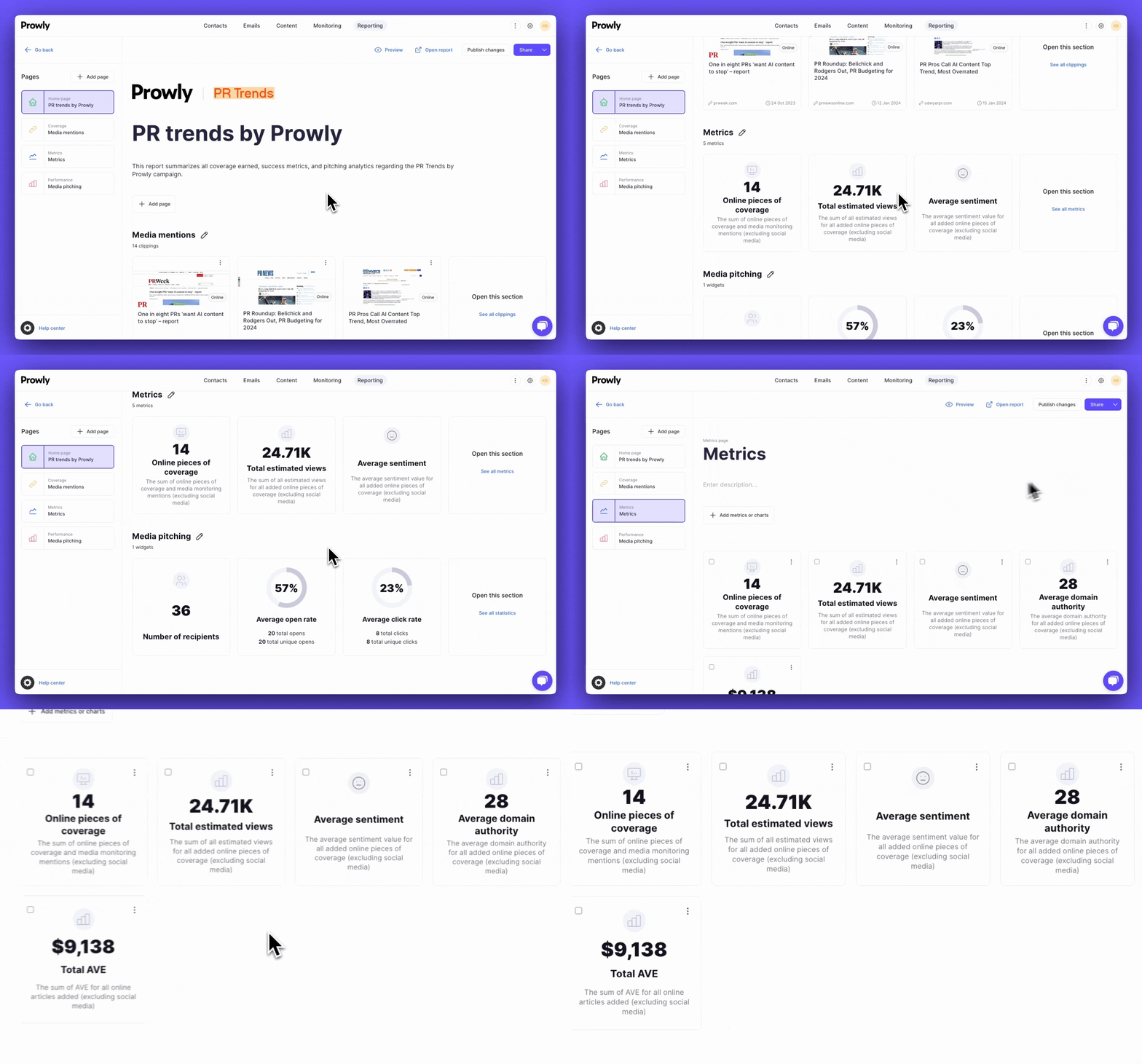
#4 Made for communicators, not data analysts
The interface is simple and intuitive—built for PR teams who need results, not a crash course in Boolean logic.
Crisis monitoring features to highlight
When issues move fast—a press leak, a viral complaint, a brewing policy debate—government agencies need more than basic alerts. They need full-spectrum monitoring built for speed, accuracy, and visibility.
#1 Precise alerts for crisis prevention
Prowly’s AI alerts are designed to surface real risks, not clutter. Use targeted keywords tied to locations, project names, or public figures to catch early signals from sources others miss—including paywalled media and broadcast coverage.
📍 Example: A paywalled trade article or niche blog about a local infrastructure project might not go viral but could spark concern at a council meeting. With Prowly, you’ll see it coming.
Key benefits:
- Use targeted keywords to create high-signal alerts
- Catch early mentions in niche/local publications
- Prep internal teams before stories gain traction
Why it matters: Free tools often miss the first wave of coverage. With AI alerts for government agencies, you’re not playing catch-up. You’re staying ahead.
#2 Dashboards for crisis tracking and recovery
In a fast-moving situation, Prowly’s dashboards provide live, shareable views of media coverage. Built for usability, they help align messaging across departments and keep leadership in the loop.
Key capabilities:
- See real-time sentiment to gauge public tone
- Track story velocity to assess reach and urgency
- Monitor specific keywords, officials, or areas
- Share dashboards instantly for internal alignment
- Includes paywalled and broadcast sources for full coverage
Why it matters: In a crisis, clarity and speed are everything. Prowly gives you both.
Together, these features show why Prowly is purpose-built for public sector media monitoring. With AI alerts for government agencies and comprehensive insight through online PR monitoring, you've got it covered. It's not just about tracking media; it's about empowering government teams to lead during moments that matter most.
Quick checklist: what government teams need in a monitoring tool
Before selecting a media monitoring platform, it’s essential to ensure it’s tailored to the needs of public sector communication teams—not just designed for global brands with oversized budgets. Here’s what to look for, and why it matters:
✅ Real-time alerts with customizable keywords
Choose a platform that allows you to:
- Set up keyword-based alerts around specific officials, projects, departments, or local areas
- Adjust sensitivity to avoid noise and false positives
- Receive instant notifications via email, app, or dashboard
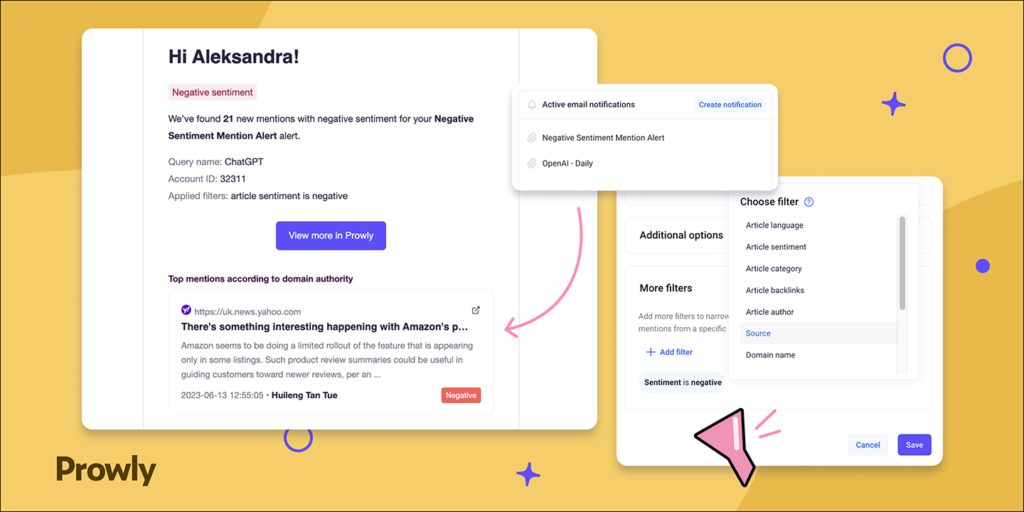
Why it matters: A timely alert can be the difference between proactive action and reactive damage control. You want to know before a story breaks wide—not after it’s already escalated.
✅ Live-updating visual dashboards
Effective monitoring tools should offer clear, visual dashboards that update in real time, allowing teams to:
- Quickly gauge sentiment shifts and public tone
- Track story velocity to understand how fast a narrative is spreading
- Spot emerging keywords and trends
- Share these dashboards instantly with leadership or departments
Why it matters: In a crisis, your team needs to interpret information fast. Visual dashboards make it easy to understand complex media activity at a glance—and act on it immediately.
✅ Easy internal collaboration
A monitoring solution should support:
- One-click report sharing with stakeholders
- Downloadable exports for council meetings, board updates, or public statements
- Real-time access for multiple users or departments
Why it matters: Communication doesn't happen in a silo. Your monitoring tool should make it easier to align responses across teams—especially during emergencies when speed and accuracy are critical
✅ Transparent pricing with no surprise fees
Look for:
- Clearly listed pricing tiers
- No hidden “enterprise” markups
- Flexibility to choose monthly or annual billing
Why it matters: Public sector teams need tools that respect their budgets. You shouldn't have to sit through three demo calls just to learn what something costs. Clear pricing builds trust and speeds up procurement.
✅ Responsive support from real people
Ensure that support is:
- Easily accessible (no long wait times or ticket queues)
- Staffed by people who understand communications goals
- Available via chat, email, or phone
Why it matters: During a crisis, the last thing you want is a generic help center. You need responsive, human support that helps you solve problems in minutes—not hours.
✅ User-friendly design for non-technical teams
The platform should be:
- Simple to navigate, even for first-time users
- Built around PR and communication workflows, not data science
- Free from overly technical language or logic-heavy search tools
Why it matters: Your comms team shouldn’t need a crash course in Boolean logic just to run a media scan. The right tool empowers your team to act confidently and independently
Use this checklist to cut through the noise and choose a monitoring solution that helps your agency stay ahead. No matter what hits the headlines.
Bottom line–be one step ahead
Crisis comms isn’t just about reacting fast—it’s about anticipating the storm.
For government teams, the stakes are too high to rely on passive tools that miss key signals. One missed article can mean public backlash, political fallout, or blindsided leadership.
It’s time to upgrade from basic alerts to proactive, online monitoring that keeps you informed, aligned, and ready to respond.
Prowly is built for this. It’s affordable, intuitive, and made for the pressure and pace of public service.
Because staying ahead of the narrative isn’t a luxury—it’s your job.
FAQ: Crisis monitoring for government agencies
💬 How do government agencies monitor crises effectively?
By combining proactive planning and real-time monitoring. This allows agencies to anticipate issues, assess sentiment, and coordinate responses quickly and accurately.
💬 Why is traditional media still important in crisis monitoring?
TV, radio, and newspapers remain trusted sources—especially during emergencies. They're essential for reaching audiences who may not be online and for ensuring credibility.
💬 What are examples of proactive media monitoring in local government?
Tracking recurring complaints on social media (e.g., potholes) for early signs of public sentiment on new policies. This enables timely action before issues escalate.