

Public relations is all about influencing attitudes and behaviors. To be able to do this effectively, though, companies need a solid digital PR strategy, designed to work towards pre-defined goals and objectives.
Luckily, there are several common steps to all PR plans listed by PR experts. By following them, you can create a public relations strategy for just about any organization:
Without further ado, here’s your step-by-step guide to creating a PR plan. At the end, you'll find a template and two PR strategy examples that you can use to get inspired.
TL;DR:
- Define clear PR goals and understand your target audience.
- Research your brand, industry, and media landscape.
- Set SMART objectives with measurable timelines.
- Choose tactics aligned with your positioning and audience.
- Track results with metrics, sentiment, and competitor insights.

How to create a public relations strategy
Strategic PR planning takes work. Even more important, it first takes thinking and preparation. Follow the PR strategy outline below to get started.
Outline PR goals
Outlining your PR goals is a good place to start creating a PR plan. According to Gregg Feistman, Assistant Chair for Public Relations @ Temple University, you should think of the ultimate thing you want to accomplish with your PR efforts, be it:
- Creating an entrée for increased sales
- Improving employee productivity and morale
- Increasing recruitment and retention
- Improving relationships with the communities your company does business with
- Finding allies as an inoculation against future possible crises
- Launching a product or service
- Entering a new geographic market
- Closing the perception gap
Once it’s clear what your PR goals are, it’s time to take a step further.
Do your research
To create a solid public relations strategy, you might want to do your research and develop an in-depth understanding of the brand you represent. This also includes relevant trends, media narrative, and audience sentiments.
Erin Yamauchi, Director of Public Relations @ eStreet.co, usually starts with a simple SWOT analysis and listing:
- STRENGTHS - things the brand does well, distinctive brand attributes that set it apart from others, resources available to support brand growth, leading products/services
- WEAKNESSES - areas of improvement for the brand, things competitors do better, superior products/services, clarity needed surrounding distinctive brand attributes, muddled messaging
- OPPORTUNITIES - underserved markets, untapped audiences, emerging markets, or new needs for brand's products/services
- THREATS - emerging competitors, downward trends/need for products/services, industry conflicts, negative audience sentiment
It’s also important to take a closer look at how your brand communicates through different channels and platforms (including your own website, social media profiles, and online newsroom).
At the same time, conduct a communication audit — review your website, newsroom, social media, newsletters, and other channels to see how your messaging is being received.
Gregg Feistman’s advice is to ask yourself the following questions:
- What’s your website like? Is it easy to find, easy to read, easy to navigate? Are the colors, layout, and design legible? Is there anything you think is really important that’s missing? The same goes for your online newsroom
- What’s your social media presence like? Do you have one? If so, how much engagement does it get?
- Were you in the media recently? What was the media coverage tone?
- What about the messages in your newsletters or mailings? Are they the things your audience is interested in?
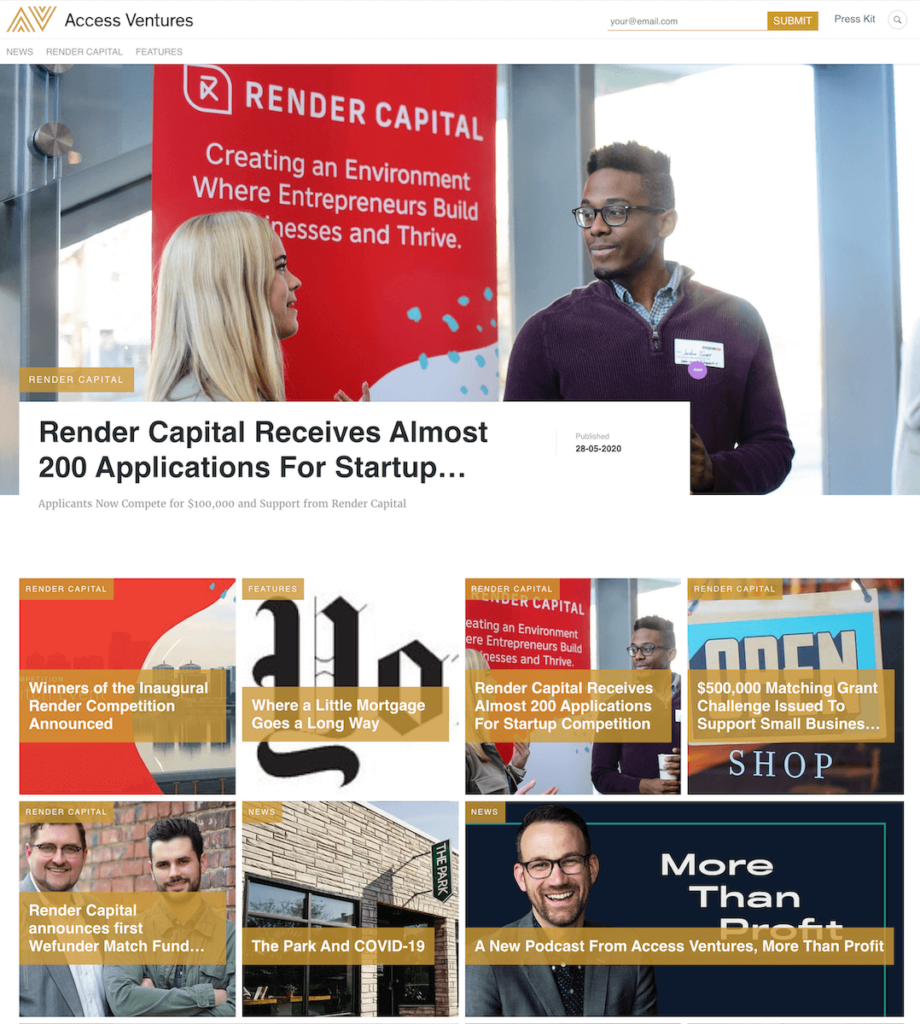
Example of an online newsroom created in Prowly by Access Ventures
Get to know your PR target audiences
According to Erin Yamauchi, a successful PR plan depends on knowing your audience inside and out. This means combining demographics (age, location, income) with psychographics (interests, values, lifestyle).
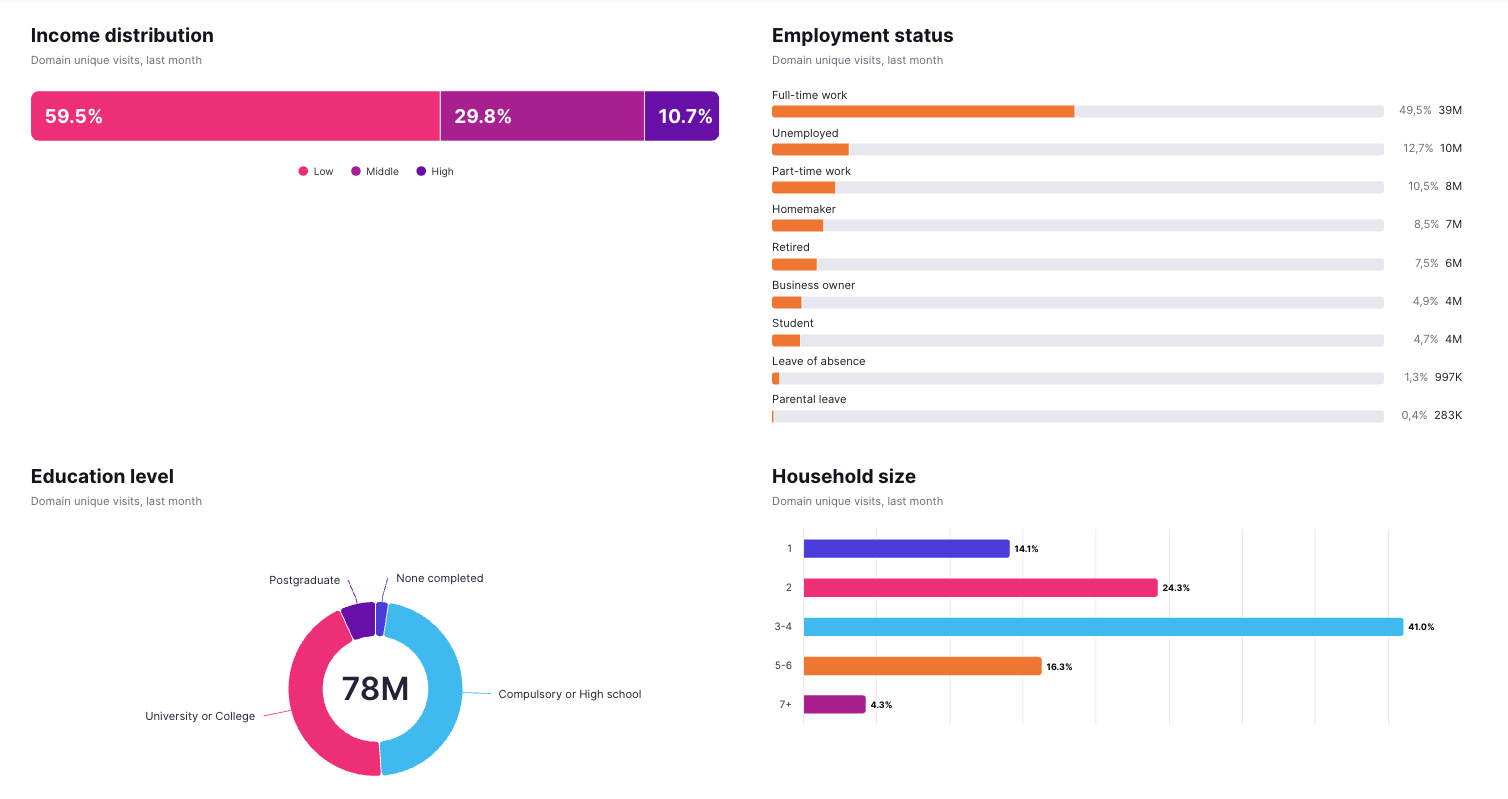
Tools like Prowly’s Media Database for PR professionals can help identify media contacts and understand audience profiles beyond basic data.
It’s equally important to know how your audience perceives your brand — and whether that aligns with how you want to be seen. If not, you’ve found a perception gap, and part of your PR strategy will be closing it.
Think of a PR strategy as a positioning statement: “Position YOUR ORGANIZATION as X.” How do you fill in the blank? You don’t have to. If you’ve done the right research and you’ve asked the right questions, your audience will do it for you. They’ll tell you what characteristics they associate with you.
Gregg Feistman, Assistant Chair for Public Relations @Temple University
If it’s not what you want to be associated with, that’s called a communication or perception gap, between what you want audiences to think of you as vs. how they currently perceive you. Then, we use communication techniques to close that gap.
But, knowing target audiences and their perception of you is only half the battle. You should also, map out where your audiences get their information — from traditional outlets to podcasts, blogs, review sites, and social platforms.
Once you have the data and can detect different patterns and trends, you can start setting the objectives.
Set SMART objectives (with a PR plan timeline)
For each target audience, set objectives that include both a measurable result and a timeline.
Gregg Feistman notes that the best PR objectives follow the SMART model:
A common model of objectives are what’s called SMART objectives:
- SPECIFIC - avoid vague aims like “improve awareness”
- MEASURABLE - objectives without a measurable aren’t objectives
- ATTAINABLE - is it something you have the resources to attain? Is it realistic? Stretch, sure. But make sure you’re not asking for the impossible
- RELEVANT - aligned with audience needs, not just internal priorities
- TIME-BOUND - short-term objectives generally focus on knowledge and awareness. Long-term objectives can more successfully drive changes in attitudes and behaviors
Oobjectives must contain two things: a quantifiable result and a PR plan timeline, i.e. Increase X by Y% in six months. This way you’ll be able to measure your final results against your efforts and what you accomplished.
Speaking of PR plan timeline Jennifer McGinley, CEO @ JLM Strategic Communications, suggests mapping deadlines and milestones on a calendar to keep the team organized and accountable.
Now, for the fun part.
Choose PR tactics that fit your strategy
Once goals and objectives are in place, select tactics that align with your brand positioning and audience behavior. As Emerald Jane-Hunter notes, digital platforms now offer endless opportunities alongside traditional PR:
Gone are the days where publicists focused on serving clients through telephone-based relationships or expensive dinners. No longer is print, TV, and radio the only avenues through which an organization can speak to the public. As public relations changes, so too do the tactics and goals of a successful strategy. With a world of new mediums and platforms now only a mouse-click away, new forms of digital PR tactics are emerging every day.
Emerald Jane-Hunter, Founder @myWHY Agency
Here, we look at some of the tried-and-tested types of PR tactics that work:
Press releases for PR campaigns
Press releases are still a core PR tool — now more versatile than ever.
Beyond announcing major company news, product launches, or partnerships, they can improve search engine visibility, establish authority, and ensure consistent messaging.
Optimized press releases can be repurposed across your website, newsroom, and social channels for maximum reach.

Press Release example from Citibank created in Prowly
Online articles & guest posts
Publishing thoughtful, well-researched articles positions your organization as an industry voice. Guest posts in reputable outlets can generate valuable backlinks, attract new audiences, and build credibility.
Influencer marketing
Influencer collaborations can amplify reach and foster trust faster than traditional advertising. Identify influencers whose values align with your brand, and work with them to create authentic, shareable content.
Building a digital PR strategy? Check which tools will help you
Media outreach
Maintaining strong relationships with journalists and editors remains critical. Tailor your pitches, respect newsroom timelines, and stay engaged with key media contacts even when you’re not pitching.
Corporate videos and interviews
Video content is highly engaging and offers a behind-the-scenes look at your brand. Interviews with leaders or subject matter experts can humanize your company and make complex topics more accessible.
Before preparing for such an interview, make sure you know what you're doing - and how to do it the best way. Get ready with this guide on how to conduct a great interview and feel confident.
How to make sure you choose the right PR tactics for your PR strategy, though?
💡 Tip: Use a “lean PR” approach — test tactics on a smaller scale, learn from early results, and adjust before scaling up.
When choosing PR tactics, start with a hypothesis of what will work to achieve your communication goal with a defined audience. Base it on past results where possible. Test the waters with small pilots — for example, pitch a few journalists first, learn from the responses, and make adjustments before scaling the outreach. This method applies to all stakeholder engagement where testing is possible.
Jo Detavernier, Principal @Detavernier Strategic Communication
Measure results
Evaluating PR effectiveness is vital for continuous improvement. Erin Yamauchi (Director of Public Relations @eStreet.co)suggests tracking:
- PR metrics - tracking engagement, website traffic, and audience reach including social media shares helps to understand how far your messages go
- Brand sentiment - highlighting key message mentions, quotes, and other story inclusions that support brand affinity and positive sentiment
- Competitive analysis - another great measure (provided the resources are available) is to look at where your direct competitors are being featured and ensure your brand has equal (and then some) placements (and here's a list of the best competitor analysis tools!)
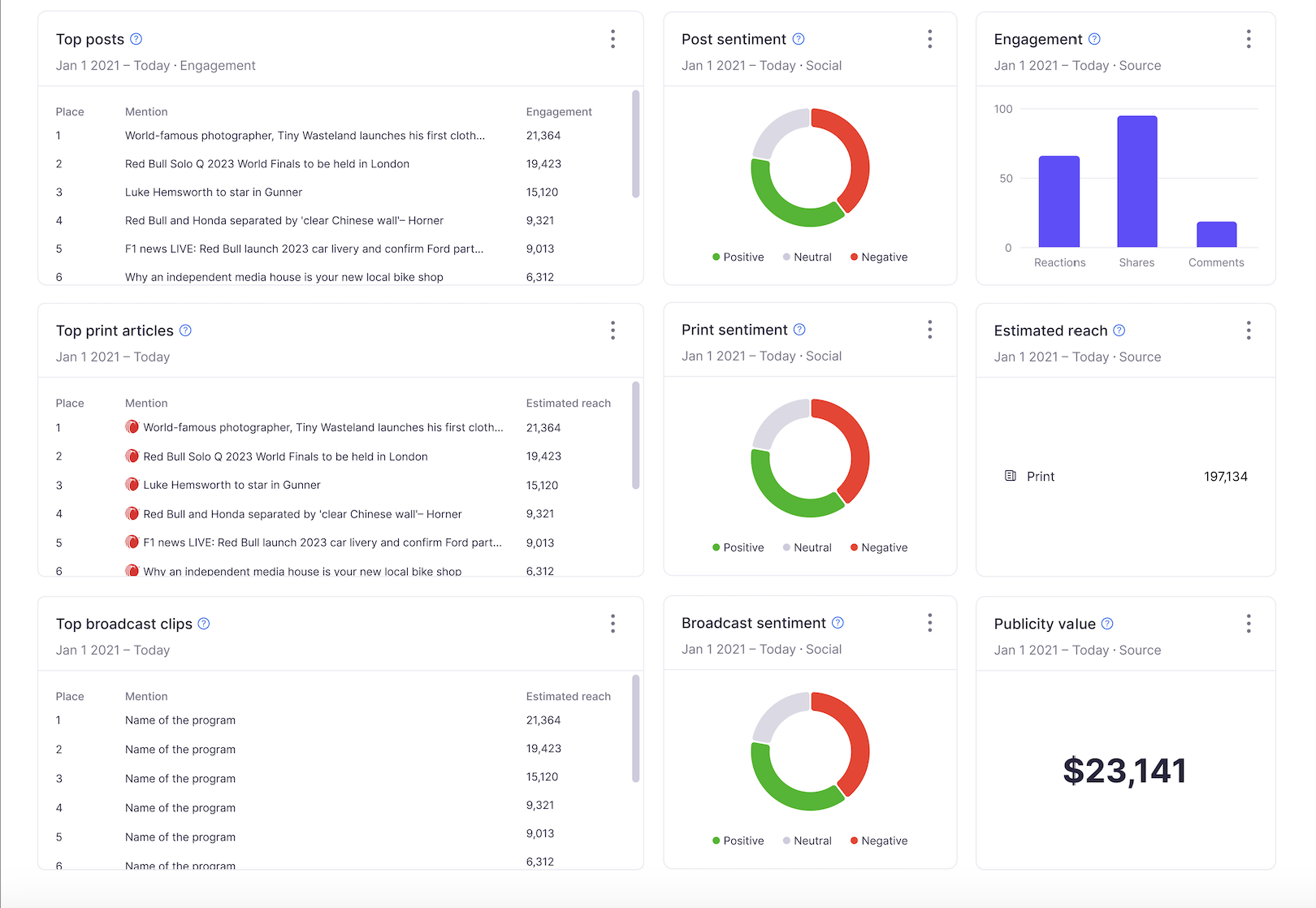
Depending on your PR goals, digital tools, and data available, you might want to measure your PR results differently. The exact metrics don’t matter, as long as you keep an eye on how your PR plan is being executed and what it means for the company. Stick to the plan, but also be flexible when needed.
However, if you'd like to dive deeper into what to measure and why, check out this article about PR metrics.
Choose the right tools
Picking the right tools for your PR strategy is crucial for effective communication and reaching your target audience.
The right software can streamline your workflow, enhance data analysis, and improve overall efficiency.
Some things you can with PR tools include:
- track mentions
- identify media contacts
- measure the impact of your PR campaigns
An example of a tool that you can use is Prowly, an all-in-one platform for PR professionals. Track and measure online media channels in one place.
Leverage a PR plan template
Looking for a simple (but powerful) PR strategy template to get you started? Here’s what works for Jennifer McGinley, CEO at JLM Strategic Communications:
- WHO: Who is your target audience, who will be involved in the implementation
- WHY: What is the overall goal and purpose, desired outcome
- WHAT: Is this a one-time launch, event, celebration, anniversary, kick-off, fundraiser. Create messaging for internal and external use, and publicity
- WHERE: Where will it take place? Offline or online? What social media platforms? Live location? Is this an event or a launch? Where will the event or campaign need to be publicized? What are the targeted media outlets?
- WHEN: What are the dates of the event, launch, campaign, etc.
- HOW: All logistics that need to be figured out and who is responsible for it
When this public relations strategy template is filled in, and organized, dates added to the calendar and charts, and those responsible for all tasks, the plan will take shape and make sense. Take a look at the examples of PR campaign plans below.
PR strategy examples
Using the template mentioned above, here are two PR plan examples that you can use to get inspired.
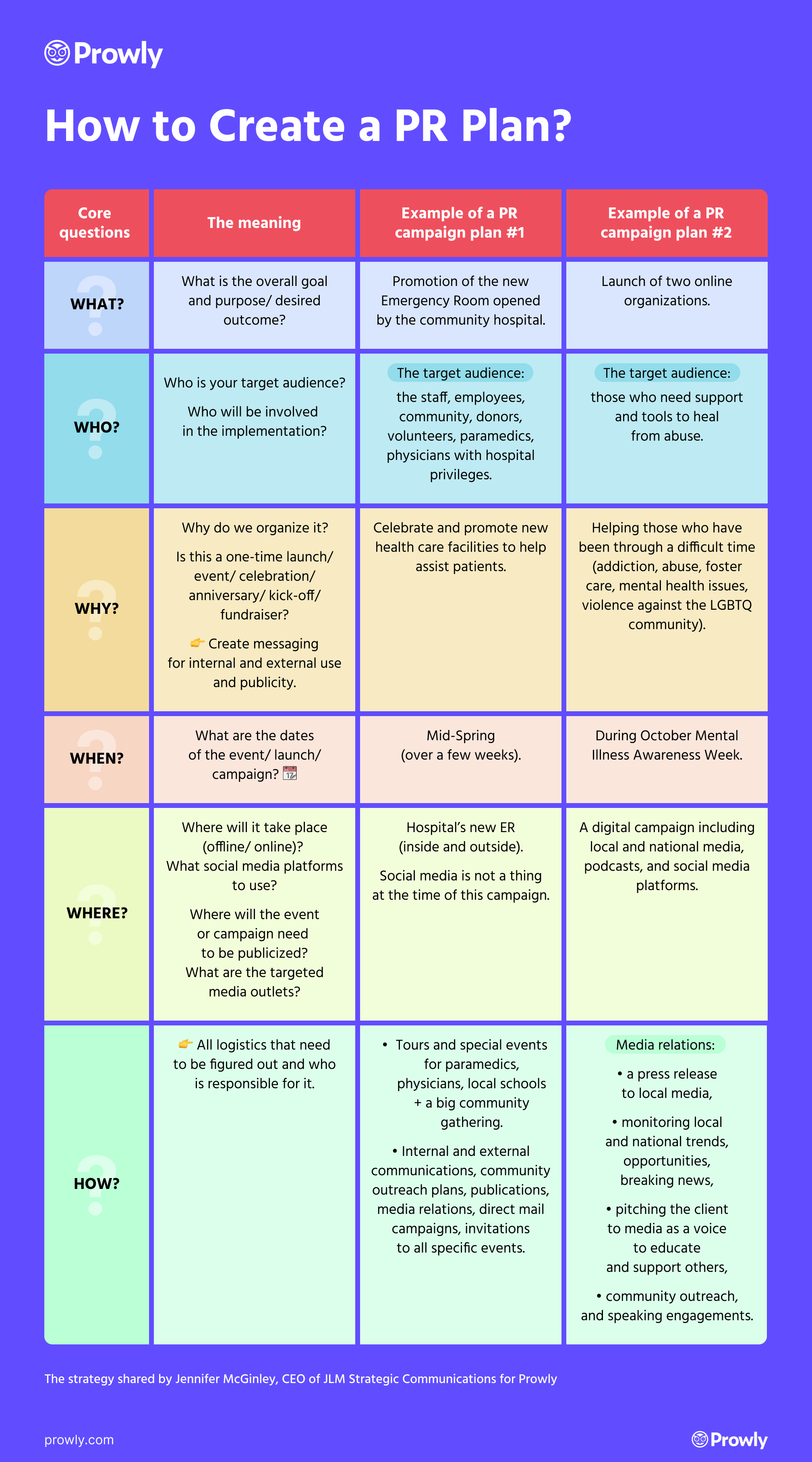
PR strategy example #1: Hospital
| Core questions | The meaning | Example of a PR campaign plan #1 |
| WHAT? | • What is the overall goal and purpose/ desired outcome? | Promotion of the new Emergency Room opened by the community |
WHO? | • Who is your target audience? • Who will be involved in the implementation? | The target audience: the staff, employees, community, donors, volunteers, paramedics, physicians with hospital |
WHY? | • Why do we organize it? • Is this a one-time launch/ event/ celebration/ anniversary/ kick-off/ fundraiser? • Create messaging for internal and external use and publicity. | Celebrate and promote new health care facilities to help assist patients. |
WHEN? | • What are the dates of the event/ launch/ campaign? | Mid-Spring (over a few weeks). |
WHERE? | • Where will it take place (offline/ online)? • What social media platforms to use? • Where will the event or campaign need to be publicized? • What are the targeted media outlets? | Hospital's new ER (inside and outside). Social media is not a thing at the time of this campaign. |
HOW? | • All logistics that need to be figured out and who is responsible for it | • Tours and special events for paramedics, physicians, local schools + a big community gathering. • Internal and external communications, community outreach plans, publications, media relations, direct mail campaigns, and invitations to all specific events. |
PR strategy example #2: Online organizations
| Core questions | The meaning | Example of a PR campaign plan #2 |
| WHAT? | • What is the overall goal and purpose/ desired outcome? | Launch of two online organizations. |
WHO? | • Who is your target audience? • Who will be involved in the implementation? | The target audience: those who need support and tools to heal from abuse. |
WHY? | • Why do we organize it? • Is this a one-time launch/ event/ celebration/ anniversary/ kick-off/ fundraiser? • Create messaging for internal and external use and publicity. | Helping those who have been through a difficult time (addiction, abuse, foster care, mental health issues, violence against the LGBTQ community). |
WHEN? | • What are the dates of the event/ launch/ campaign? | During October Mental Illness Awareness Week. |
WHERE? | • Where will it take place (offline/ online)? • What social media platforms to use? • Where will the event or campaign need to be publicized? • What are the targeted media outlets? | A digital campaign including local and national media, podcasts, and social media platforms. |
HOW? | • All logistics that need to be figured out and who is responsible for it | Media relations: • a press release to local media, • monitoring local and national trends, opportunities, breaking news, • pitching the client to media as a voice to educate and support others, • community outreach, and speaking engagements. |
Conclusion
Ready to give your PR strategy a thought? With Prowly, you can save time on executing PR plans – from finding relevant media contacts to creating visual press releases, sending email pitches, and maintaining journalist-friendly newsrooms.
FAQ (Frequently Asked Questions): PR strategy
What is a PR strategy?
A structured plan outlining how an organization communicates to achieve goals like awareness, trust, and engagement.
What are the key steps in a PR strategy?
Set goals, research, know your audience, set SMART objectives, choose tactics, measure, and use templates.
How do you measure PR results?
Track engagement, reach, sentiment, and compare with objectives.
Which tools can help?
Media monitoring and outreach platforms such as Prowly.