

TL;DR:
- Nonprofit PR in 2025 is all about trust, transparency, and mission-first messaging.
- Use AI-powered tools to monitor media, personalize outreach, and automate reporting.
- Reach the right audiences through UGC, creators, and targeted communications.
- Learn from real campaign successes and failures to sharpen your strategy.
- Measure what matters: community impact, sentiment, and visibility over vanity metrics.
Nonprofit PR in 2025 – doing more with less
Getting attention for a good cause shouldn’t feel impossible. Yet with limited budgets, small teams, and rising noise online, many nonprofits struggle to cut through. The good news? You don’t need more staff or bigger campaigns—you need sharper tools and a clearer strategy.
From using AI to speed up media monitoring, to personalizing your outreach and proving real-world impact, you’ll find practical steps tailored for nonprofit teams.
This guide walks you through how to run modern, mission-driven PR campaigns in 2025.
Try Prowly's media monitoring free for 7 days
Start tracking your nonprofit mentions for free (no credit card required) in Prowly.
- Comprehensive monitoring: Track the web and social media mentions.
- Transparent pricing: Plans start at $258/month
- All-in-one platform: Get everything you need in one tool for PR, incl. media database, outreach, reporting, and more
How is nonprofit PR different from corporate PR?
Writing press releases for a coffee brand is vastly different from promoting a nonprofit fighting child hunger. Nonprofit public relations focuses on mission-first storytelling and building trust, not selling products.
Nonprofit public relations is different due to:
#1 Mission-driven messaging
Every communication has a purpose. This isn't about selling a product—it’s about advancing a cause. Press releases, interviews, and social media posts must all reinforce your mission and values.
#2 Transparency and trust
Nonprofits are held to a higher standard. Communications are often viewed as public record, so clarity and accuracy are essential. One unclear message can trigger reputational risk.
#3 Small errors, big consequences
Mistakes—like misreported data or missing context—can spark backlash, spread misinformation, or erode trust. For nonprofits with public funding or partnerships, there's little room for error.
#4 Impact over KPIs
Success isn’t measured in sales—it’s measured in reach, sentiment, visibility, and community traction. These are harder to quantify, but they’re what matter most in nonprofit PR.
#5 Conflicting reporting needs
Board members, grant-makers, partners, and stakeholders all expect different updates. One-size-fits-all reporting rarely works. Flexible, tailored tools are key.
#6 The role of AI and search algorithms
Nonprofits often struggle to compete with commercial content online. And in 2025, search is increasingly powered by AI. Optimizing for discoverability is more critical than ever.
👉 We’ll show you how to seize this opportunity later in the guide.
How to build a powerful nonprofit PR strategy in 2025
More structure. More speed. More relevance. That’s the formula for running a nonprofit PR campaign that leaves a lasting mark on your mission and your audience.
Step 1: Get smarter about monitoring and reporting
In nonprofit PR, monitoring isn’t just tracking mentions—it’s an end-to-end process. You start with precise queries, track coverage using a tool like Prowly, and turn that data into insights stakeholders can understand.
With Prowly, you can:
- Set up media monitoring across web, social and legal updates.
- Track key PR metrics like reach, sentiment, and audience engagement.
- Use AI to craft personalized email pitches quickly.
- Generate shareable, visually polished reports in one click.
Step 2: Tailor all external content to your audience
Got the strategy? Awesome. Now it's time to sharpen up your story and make sure it's the best it could be before you begin outreach.
It's crucial to get crystal clear on what you want to say, and who you're saying it to.
Do you want to inspire voters, do PR for charity to get donations, change public policy, or maybe simply raise awareness? Each one of these requires a different tone, message, and outlet.
The difficulty here is thinking that writing a press release as if you were doing it for The New York Times will cut it. Chances are, it won't. In 2025, you need more than just a nice story.
You need content that will feel relevant, shareable, and most of all: real. Most of the time, you'll be speaking to Gen Z or Gen Alpha, who scroll TikTok, watch vertical videos, and trust people who think the same as them.
💡 Cool PR ideas for nonprofits? Think about UGC content, peer-recorded videos, raw clips from real people, or interesting behind-the-scenes images.
However, just in case you need something more formal, here are effective nonprofit press release examples to inspire you in writing your own. If none of these are cutting it for you and you need something even more personalized, Prowly's AI writing assistant can help you save time by brainstorming ideas with you.
Step 3: Use impact creators to maximize media outreach
In nonprofit PR, success isn't about how many emails you send—it's about how well you target. That’s where “narrowcasting” comes in: focusing on the right journalists, influencers, and niche audiences.
Prowly’s media database helps you find verified contacts quickly—no spreadsheets required. Then, use AI to generate personalized, data-backed pitches that connect.

💡 Impact creators—micro-influencers with deeply engaged communities—can drive stronger results than mass media placements.
One of the key PR strategies for nonprofits in 2025 is knowing who to target.
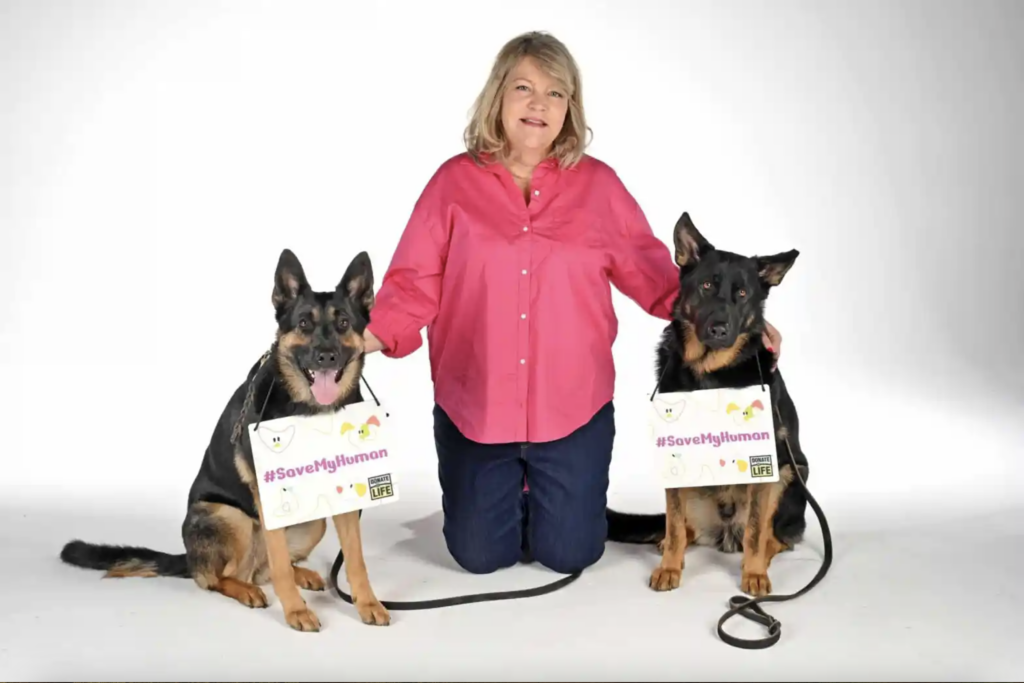
There's a new idea on the radar too: impact creators. They're usually micro-influencers with really, really dedicated and faithful audiences. Just take a look at the rise of pet influencers or pets representing the Save My Human cause.
Step 4: Use brand mentions to boost nonprofit visibility in AI-generated search
As search evolves, so do the ways people discover and engage with nonprofit organizations. Increasingly, platforms like ChatGPT, Gemini, and other AI assistants are becoming go-to tools for finding information—including causes to support, organizations to donate to, or campaigns to follow.
That’s why earning consistent, high-quality press coverage is now a visibility strategy—not just a PR win. Strong media mentions help your nonprofit show up in AI-generated responses and voice-based searches.
With Prowly, you can take full control of this discoverability shift:
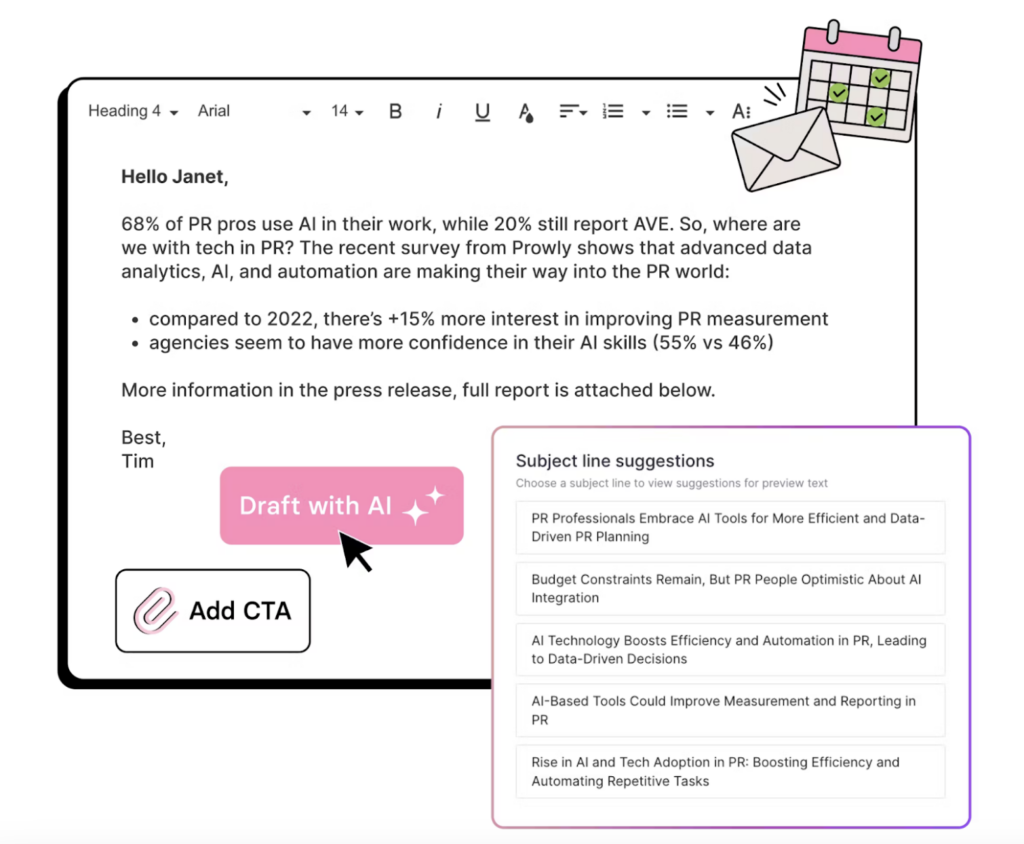
- Write press releases that are clear and mission-driven using Prowly’s smart editor
- Find and pitch the right journalists to secure a strong brand mention with data-backed insights and built-in media lists
- Ensure your messaging stays consistent, improving how you're represented in both search engines and generative answers
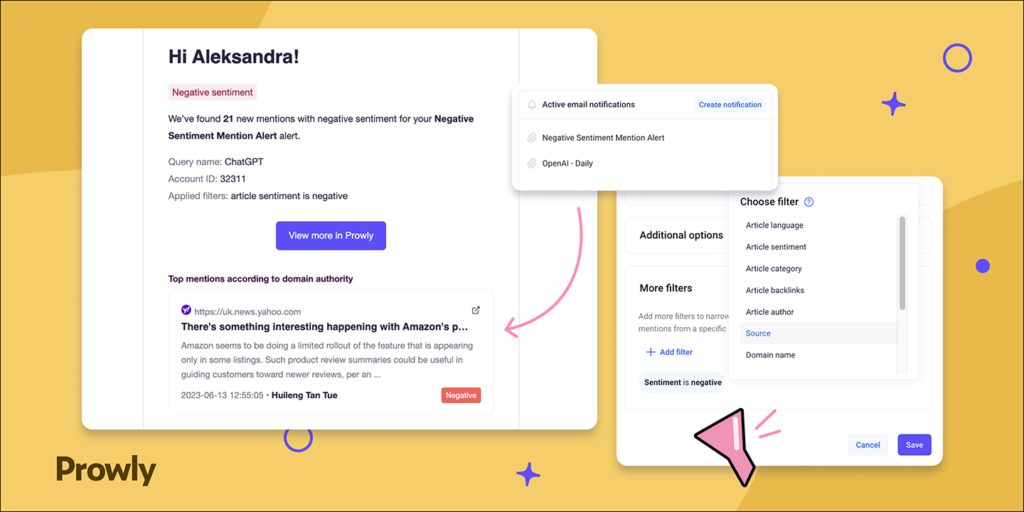
- Monitor your brand mentions across online and social platforms
In 2025, your nonprofit’s visibility depends on more than a Google rank—it hinges on how well your story is told, shared, and surfaced across intelligent platforms. Prowly helps make that happen, with tools designed for both impact and efficiency.
Step 5: Know how to handle PR crises as an NGO
To develop effective PR strategies for nonprofits, you need to make crisis management the highlight of your plan. Here's an example of a nonprofit campaign failure, even if they initially meant well.
Remember the Kony 2012 campaign?
It was created by Invisible Children with the goal of raising global awareness about Joseph Kony, a warlord responsible for widespread abductions and the recruitment of child soldiers in Uganda.
The campaign video went viral and sparked an unprecedented wave of online activism.
However, it also drew criticism for oversimplifying a deeply complex issue—focusing primarily on Kony’s villainy without fully addressing the broader political, cultural, and historical context of the region. Some observers also raised concerns about the campaign’s tone, pointing to elements of “white saviorism” in its narrative approach.
Lessons learned = nonprofit PR crisis tips:
- Anticipate how your message may be interpreted
- Avoid oversimplifying complex social issues
- Be transparent and quick to respond
- Involve the communities you represent
To learn more about how to handle crisis management, check out this PR Crisis Management Playbook with secret tips from professionals. More interested in social media? There's also a Social Media Crisis Management Guide for 2025 waiting for you.
How to measure PR impact for nonprofits and NGOs—and report it effectively
Value mission outcomes over conversions, clicks, leads, sales, and so on. For example, intertwine the results of your coverage in powerful sentences with numbers:
- "Donations increased by 15% after our campaign hit local news"
- "Volunteer sign-ups doubled following our radio interview"
- "Our pop-up generated $5,500 in donations on the first day"
That's what your stakeholders will care about.
Unfortunately, they probably won't care about getting 15.4k likes on a TikTok video meant to spark up a local community (but received irrelevant likes from other corners of the world).
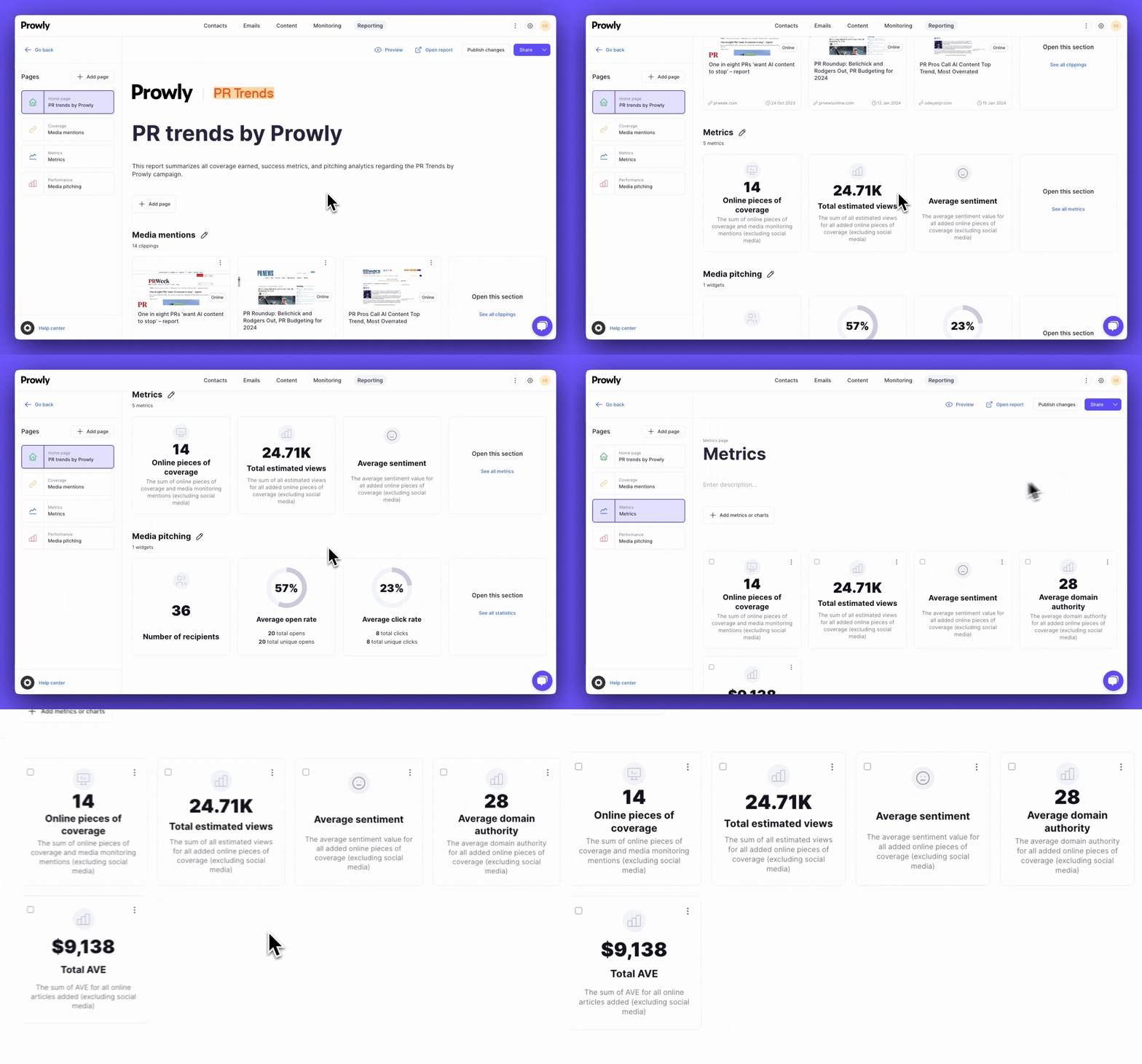
The faster you adopt the idea of using dedicated tools to help you with PR campaigns for nonprofits, the better you'll be able to show real value instead of irrelevant commercial KPIs. That way, you can spend less time on finding insights manually, preparing reports from scratch, constant copying and pasting data between modules and remembering to check data for accuracy.
Also, don't overlook traditional media just yet. While it's not the most popular option for some cases, it's often local outlets that shape public sentiment, influence policy, and work on building credibility with potential charity donors.
What helps you show value to stakeholders?
- Visual dashboards: these communicate reach, sentiment, and demographics without the need of having an advanced, expensive data analyst on call.
- Understandable reports: learn how to highlight what matters to grant-makers, such as consistency of your message, visibility, and community traction.
- Brand identity: templates in same colors, visually strong reports, and consistency all around.
- Holistic insights: show data from online outlets and social media in one, digestible story.
Nonprofit PR case studies: wins and failures
You've seen it, we've seen it, everyone else has seen it as well. It doesn't matter how high your budgets are, even the best organizations out there can get PR right, or wrong. These real-world examples will show you how some struck a cord with the public, while others missed it completely.
Success: ‘Let’s Lift the Curfew’ – empowering women through safer movement spaces
This Girl Can’s 2024 campaign, Let’s Lift the Curfew, responded to a growing concern: nearly 75% of women feel they can’t exercise outdoors at night due to safety fears. The campaign aimed to raise awareness around the invisible “curfew” women face during winter evenings and to create a more inclusive environment for physical activity.
Using a mix of PR, on-the-ground events, and social storytelling, the campaign coordinated over 100 community-led night runs across the UK—featuring glow-in-the-dark displays and a flagship event in Manchester. The result was a wave of national coverage, public conversation, and renewed focus on women’s safety in public spaces.
👉 Why it worked: It tackled a widely shared but under-discussed issue with data, emotion, and community participation—making it a powerful example of nonprofit PR done right.
Success: ‘Oblivia Coalmine’ – climate activism through satire and storytelling
Make My Money Matter’s Oblivia Coalmine campaign combined satire, star power, and social responsibility to address a serious issue: the UK’s £88 billion in pension investments tied to fossil fuels.
The campaign featured Oscar-winner Olivia Colman playing a fictional oil executive named “Oblivia Coalmine”—a sharp, humorous critique of how pension funds can fuel environmental harm. By using engaging video storytelling, the campaign sparked national media coverage, boosted public understanding of pension-linked climate impacts, and empowered individuals to demand change from fund providers.
👉 Why it worked: It made a complex financial topic easy to understand, emotionally resonant, and highly shareable—essential traits for successful nonprofit PR campaigns.
Failure: “We Are All Human” campaign (2017)
In 2017, the Human Rights Campaign launched We Are All Human, a campaign aimed at promoting LGBTQ+ inclusivity. The initiative featured high-profile celebrities and received widespread visibility across media channels.
However, some critics felt the campaign lacked authenticity and didn’t fully reflect the diversity and lived experiences within the LGBTQ+ community. The concern wasn’t the intention—but the perception that it leaned too heavily on celebrity endorsement without deep community representation.
💡 A similar conversation emerged around the ALS Ice Bucket Challenge, which gained global traction but later faced questions about financial transparency and long-term impact.
👉 Takeaway for nonprofit PR teams: Visibility alone doesn’t guarantee success. Campaigns must reflect the voices of those they represent, stay grounded in authenticity, and be transparent about their goals and outcomes.
Key takeaways for successful nonprofit PR campaigns
- Align your message with real outcomes — Go beyond visibility. Make sure your campaign drives meaningful impact that supports your mission.
- Prioritize authenticity — Center your community’s voice and lived experiences. Performative messaging erodes trust.
- Be inclusive by design — Representation matters. Make sure your campaign reflects the people and issues you serve.
- Get creative with your formats — Use storytelling, UGC, events, and even satire to connect with different audiences.
- Focus on long-term trust, not just quick wins — Sustainable reputation grows from transparency, accountability, and consistency.
- Put community first — Campaigns that lack substance or genuine engagement will struggle to resonate—especially with younger, values-driven audiences.
Frequently asked questions (FAQ)
💬 What makes nonprofit PR different from corporate PR?
Nonprofit PR focuses on trust, mission alignment, and social impact rather than commercial goals.
💬 How can AI help with nonprofit PR in 2025?
AI speeds up press release writing, outreach personalization, coverage tracking, and stakeholder reporting.
💬 What tools are best for nonprofit PR campaigns?
Tools like Prowly combine media databases, AI assistance, and reporting features tailored to small nonprofit teams.
Empowering your mission with smarter PR
Even the most promising public relations ideas for nonprofits can result in barely anything if you're not using the right tools to monitor and report your work. Nonprofit communications teams are usually small, or employ a single person to juggle a plethora of responsibilities. In that case, it's useful to have tech work for you, not against you.
With Prowly, you don't need to be a data analyst or take hours to learn the tool itself. You can dive right in to clear and accurate monitoring that will assist you in spotting risks, reporting successes and staying focused on your mission.
Get a holistic system that's built to speed up your non profit PR campaigns. 👇