

In this article, we've put together a brief online reputation guide. It includes information on what an online reputation score is, how it works, and what PR teams can do to improve it using professional tools. You'll also learn how media monitoring can help with any star rating system out there.
TL;DR – Key takeaways on online reputation score
- An online reputation score reflects brand sentiment, reviews, and media visibility.
- PR teams can influence it via proactive communication, earned media, and sentiment monitoring.
- Tools like Prowly help monitor mentions and track sentiment in real time.
- Use press releases, social engagement, and crisis planning to raise your score.
Try Prowly's media monitoring free for 7 days
Start tracking your brand and keywords for free (no credit card required) in Prowly.
- Comprehensive monitoring: Track the web and social media mentions.
- Transparent pricing: Plans start at $258/month
- All-in-one platform: Get everything you need in one tool for PR, incl. media database, outreach, reporting, and more
What is an online reputation score?
An online reputation score is a numerical value that reflects how your brand is perceived across digital channels—including online reviews, media coverage, and social media sentiment. It is used to evaluate brand credibility, public trust, and overall reputation health.
Although different platforms use varying scoring systems (such as a 5-star rating or a 1–1000 scale), most reputation scores are calculated based on a combination of:
- Customer reviews and feedback
- Media and press coverage
- Social media sentiment
- Search engine visibility (SEO)
- PR crises and how they were managed
For PR professionals, the online reputation score is a vital metric for tracking and improving brand perception, measuring public sentiment, and demonstrating the impact of PR efforts over time.
In short, your online reputation score shows how the public sees your brand across all digital touchpoints—and it can be influenced through strategic PR, media monitoring, and crisis communication planning.
What is a good reputation score?
Unfortunately, there isn’t one way to measure your online reputation score. It’s not calculated uniformly across all providers. Each provider has their own methodology for calculating reputation scores depending on what matters most to their customer base. For example, a provider can take into account unverified Google reviews, while another may not even consider them.
What matters most is transparency and accuracy, not artificially inflating your score.
To keep your strategy honest and effective, here’s how to handle PR crises the right way and prevent long-term damage to your reputation score.
5 reasons why your online reputation score matters in PR
#1 It influences public trust
If I see that a brand has a good, or even great, reputation in different social circles, across different demographics, I instantly trust that brand. Working in PR has surely taught you how to sniff out paid scenarios, but feeling the positive energy around a brand can be mostly subconscious.
Want to know how journalists evaluate brands? Here’s what makes a press release trustworthy in the eyes of the media.
#2 It shapes consumer’s decisions
What do you usually do before buying a product? Even if someone recommended it to you, chances are you’re interested in reading a few online reviews to see if your purchase will be worthwhile.
#3 It signals credibility
Positive testimonials from real clients, good opinions on a wide variety of forums, Google reviews, good SERP results and an unharmed image can raise your reputation score. To your customers (that oftentimes turns credibility into straight sales) you’re a brand they can trust. This goes for journalists, investors, and stakeholders as well.
#4 It helps strategy
Your score might not be ideal, and well, what fun would it be if it was? Knowing what your reputation score is helps you assess what you need to do in order to raise it.
#5 It proves a positive ROI
It was never easy and it’s doubtful that proving PR ROI will ever get less difficult. However, there are certain things that can help show off your success to teams and stakeholders: like a concrete metric within a scale.
P.S. Learn more about How to Measure the ROI of PR (With Metrics That Actually Matter) here.
How tools calculate reputation scores
To calculate an online reputation score, most tools use a scoring model that reflects a combination of measurable data points. These can include customer sentiment, online reviews, social media engagement, brand visibility, and even PR crisis impact.
There is no single universal method—each tool or platform uses its own proprietary scoring formula. For example:
- Some use a 1000-point scale based on sentiment, content reach, and media exposure.
- Others apply a 5-star rating system, especially in review-driven industries like hospitality or retail.
- Certain platforms integrate SEO metrics, brand mentions, and sentiment polarity to create a more dynamic score.
Your industry plays a major role in how your reputation score is calculated.
- A hotel or restaurant may depend heavily on platforms like TripAdvisor or Google Reviews.
- An eCommerce brand might prioritize social media sentiment, influencer mentions, and user-generated content.
No matter the scoring model, the accuracy of your score depends on transparent data—not on downplaying negative sentiment. Attempting to "game" the system can lead to misleading scores and poor long-term brand trust.
Popular tools that help calculate and improve online reputation scores include Prowly, Brand24, Reputation.com, and Google’s NLP (Natural Language Processing) API.
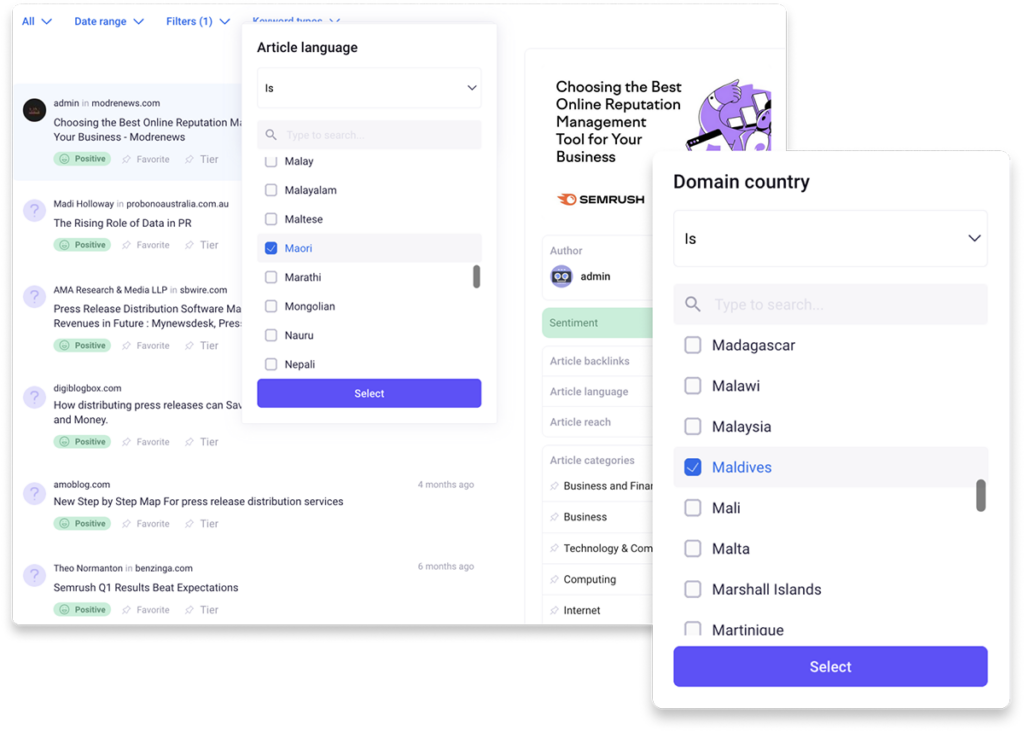
✅ With Prowly’s Media Monitoring, you can build custom queries, track sentiment in real time, and monitor changes in your online reputation across multiple channels. This helps you spot early signs of reputational risk and take action to shift public sentiment positively.
6 PR strategies to improve your reputation score
#1 Monitor mentions & sentiment regularly
How often do you check your dashboards?
The most successful teams prepare daily mention and sentiment reports in order to stay on top of the landscape and their own reputation.
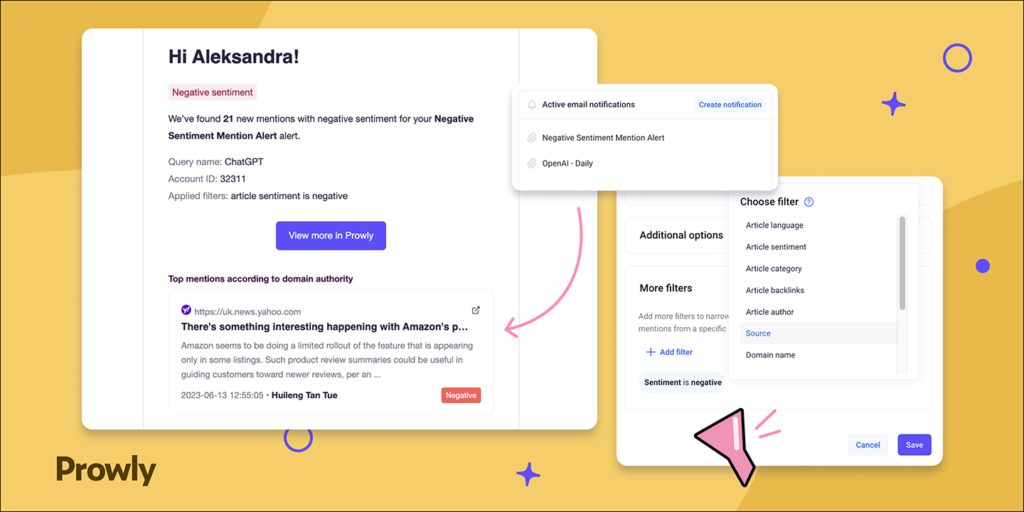
In addition, real-time mention alerts are probably the best feature a PR tool can have, so that you get a notification when something out of the ordinary happens (instead of needing to check on it dozens of times a day).
#2 Amplify positive feedback, reviews, and earned media
If a customer or a partner give you positive feedback or a phenomenal review, don’t be afraid to show it off. Usually, people will comment or share positive sentiment towards a “win,” so your reputation score might automatically increase.
Same goes for earned media publications, where one shared post on your company’s LinkedIn or Facebook can attract multiple outlets and journalists who will be happy to spread your story.
#3 Respond to criticism transparently and quickly
Bad comments mean bad reputation score. There’s no rocket science to it. However, the faster you respond, the less of a chance you’ll need to stop an entire avalanche instead of a small snowball. Remember the more negative comments or feedback you have, the lower your score will get.
#4 Promote brand wins through press releases
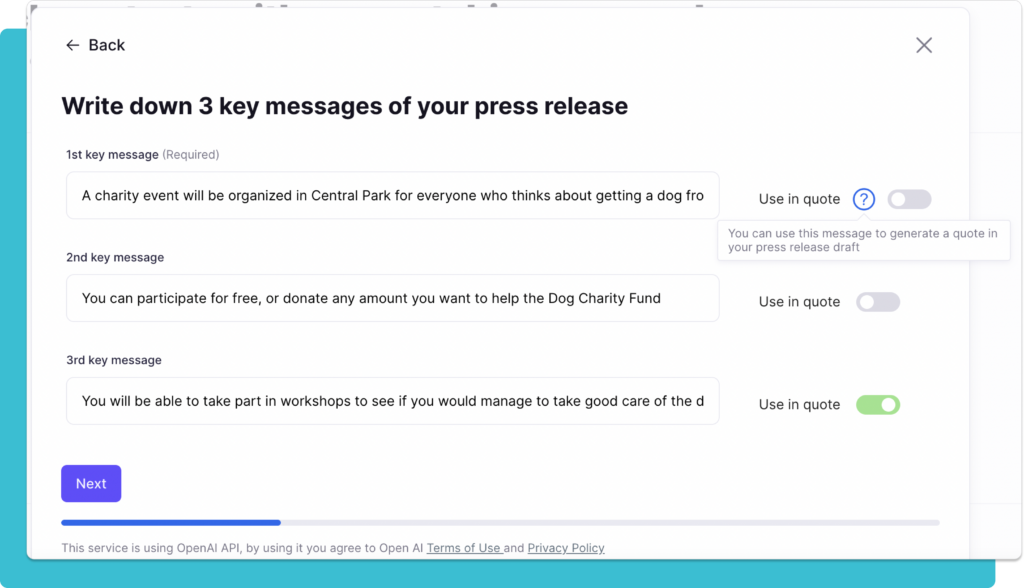
I’m sure there are people who want to buy your new product. But share your wins as well! Sold out within an hour? Great topic to start. Sold more within the first month than in your company’s history? Amazing. Gained a new audience thanks to some release or publication? Let your audience know.
#5 Engage with your audience on social media
If your brand is growing, chances are people are really sympathetic towards it. Engage with your audience on different social media platforms and pull them towards positive conversations. Share stories, personal anecdotes, funny jokes. All this depends on your audience, but getting positive traction will also increase your brand's online reputation score.
#6 Prepare a proactive crisis communication plan
If you’re not ahead, then you’re already behind. If you don’t have a proactive communication plan in case of a crisis, you’re risking serious damage to your online reputation score. The faster you respond, the easier it will be to put out a fire and shrink any consequences of a public outcry.
How to monitor and track your score over time
Monitoring what's happening over time helps highlight the importance of online reputation management. Here are the most often used, most effective strategies to guide you forward.
Use real-time alerts and sentiment dashboards
Ever had a client scream "Fix my online reputation or else my business will go bankrupt?" Business reputation monitoring is crucial at all stages of a customer's business journey, even if you think it's already "the end." The best online reputation managers know that in order to keep on top of the news, they need to set up real-time alerts and intuitive sentiment dashboards so they can spot any trends or outliers straight away.
Need help tracking what’s being said? Here’s how to track media mentions effectively to catch issues before they escalate.
Set monthly benchmarks and reputation goals
The online presence score of any company or organization varies. For example, if you're a small business, you might be fighting for every positive point (and thus, can't afford any negativity).
To know how you're doing progress-wise, set up monthly benchmarks and goals. The importance of a reputation score lies in knowing how much you can improve it and by doing what, as well as tracking what makes it go down.
Integrate online reputation score into your PR KPIs
It's like giving your managers a reputation report card. Let's say you're in the hotel business, and you want to show all stakeholders the great job your company is doing. Simply attach a star rating to it from a popular provider.
This doesn't mean that you've solely contributed to this rating. Chances are, you haven't done a lot. But if that rating goes down in a crisis, you'll probably be the one left to manage reputation online and offline.
Thankfully in these cases, you don't need to monitor anything manually anymore. Good online brand reputation management means investing in all-in-one PR tools that speed up tasks and support getting things done quicker with workflow automation.
With Prowly, you can automate your entire PR workflow by integrating media monitoring, sentiment analysis, and performance reporting all on one dashboard.
How Prowly helps you track and improve your online reputation score
While we're not a service that gives you a star rating, Prowly PR software can help your public relations team build and protect a strong reputation across media channels. Here's how:
- Media monitoring: with advanced metrics, you can track online and social media mentions to know the public's sentiment about you. That way you know which aspects of your reputation need more attention and which ones are doing just fine.
- Press releases: a newsworthy story will surely get positive accolades in the media, and you can do this more easily with an AI Assistant to help with drafts and email headlines.
- Media database and PR CRM: build long-lasting relationships with journalists who want to hear your story and put it on the frontlines.

- Analytics and reporting: collect all metrics and transform them into intuitive, easy-to-read coverage reports.
A good reputation score reflects smart PR
Having a stellar reputation score can impact not only the way people see you, but also directly translate into sales and engagement. While many providers can give you an online reputation report or a reputation scorecard (whatever you want to call it), the key is choosing the right one for your needs.
PR teams can actually define digital reputation by uncovering what is moving it towards an upwards trend and what is making it go down. At the end of the day, managing your reputation score is a key performance indicator for any modern PR team.
Manage your reputation with advanced media monitoring features and see how you can make a real impact improving your company online reputation. Start improving your online reputation score today with Prowly’s free trial.